Professor Syed Ahsanul Alam:
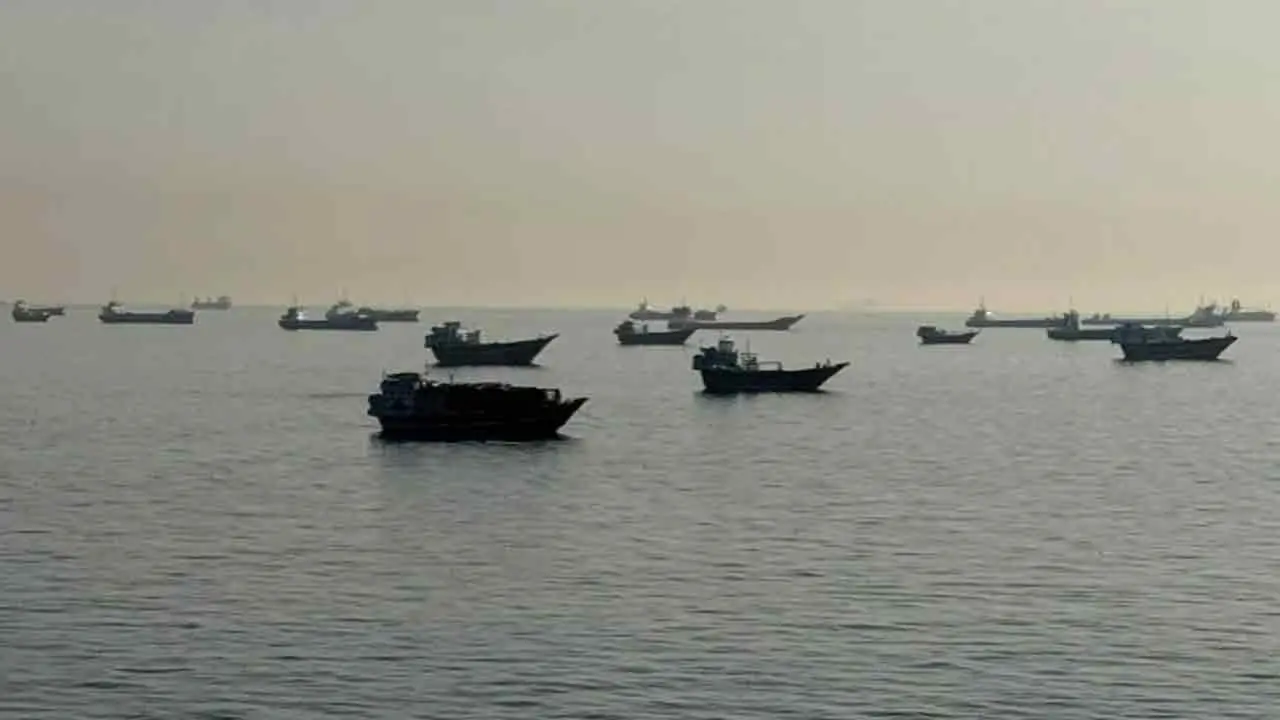
Iran does not look like a clean loser, but it does not look like a strategic winner either. The data-based reading after the ceasefire is that Tehran has proved it can still impose very high costs on the region and on the world economy without achieving a stable new order. Even after the agreement, the Strait of Hormuz has not returned to normal commercial use. Reuters reported on April 9 that Iran was allowing only a limited number of vessels through, while ADNOC’s chief said the Hormuz remained effectively “restricted, conditioned and controlled,” with roughly 230 loaded ships stalled. Major shippers such as Maersk have also stayed cautious, saying the ceasefire does not yet provide full maritime security. That means Iran has demonstrated coercive leverage, but not durable control that the rest of the system is willing to accept as legitimate.
So the post-ceasefire reality is best described as an unstable balance of deterrence. Iran has shown that it can threaten one of the world’s most important energy chokepoints, which handles about one-fifth of global oil flows, and that alone changes regional calculations. But the same move has also triggered broad international pushback. The UN’s maritime agency warned that any Hormuz tolling regime would set a “dangerous precedent,” and Reuters reported that Iran’s proposal to condition passage remains at odds with the legal norm of transit passage. In other words, Iran can obstruct and bargain, but it cannot easily convert wartime leverage into recognized peacetime sovereignty over Hormuz.
That is why the next phase is unlikely to be a clear military victory phase and much more likely to be a bargaining phase. Iran’s strongest card now is not conquest; but controlled disruption. By keeping the strait only partially functional, Tehran can remind every outside power that Gulf energy security still runs through Iranian risk. Yet the data also show the limits of that approach. Barclays warned on April 9 that delayed recovery in Hormuz flows is creating upside risk even to its $85 Brent baseline, with disruptions estimated around 13–14 million barrels per day. The IMF has also warned the war will leave slower growth and higher inflation even if the fighting cools. That means the longer Iran leans on economic coercion, the more it increases the chance of an international coalition forming not to accommodate Tehran, but to contain it more aggressively.
My forecast is that the most likely next step is not full war resumption immediately, but a tense negotiation window in which all sides test the ceasefire while preparing for failure. AP and Reuters both reported that this is a two-week ceasefire tied to negotiations, not a final settlement, and that U.S. forces remain in the region while diplomacy continues through Pakistani mediation and UN engagement. That strongly suggests a short interim period in which Tehran will try to trade maritime de-escalation for broader political gains such as sanctions relief, recognition of security guarantees, and a more formal navigation protocol. Iran had already signaled, through its response to ceasefire proposals, that it wanted a permanent framework rather than a temporary pause.
In military terms, Iran’s position after the ceasefire is stronger in deterrence than in dominance. It has shown it can threaten shipping, raise insurance costs, and keep regional rivals economically off balance. But Reuters also reported damage and disruption across Gulf energy systems, including a cut of around 600,000 barrels per day in Saudi production capacity and about 700,000 barrels per day in East-West Pipeline throughput after attacks. That matters because Iran’s message to the region is not “I can govern the Gulf,” but “I can make the Gulf ungovernable at acceptable cost to myself.” This is classic denial power, not stabilizing power. A state can use denial power to force talks, but it is much harder to build a lasting regional order on that basis.
Politically, the biggest near-term beneficiaries may actually be the external mediators and energy-importing powers rather than Iran itself. Reuters reported that China is openly backing the chance for peace and has been in active contact with all sides. If the ceasefire holds, Beijing gains as the power that benefits from reduced oil-price panic without carrying the direct military burden of policing the Gulf. The UN also gains space to push for a “durable” settlement. Iran, by contrast, gains recognition of its deterrent power and military relevance, but not yet recognition of a new lawful regional status.
The most probable 30-to-90 day outcome is a messy partial normalization rather than a genuine peace. Some vessels will resume passage, but major insurers, traders, and ship owners are likely to demand new premiums and stronger guarantees. Prices may come off their panic highs, but not return quickly to the old risk structure. Reuters and other outlets show that even after the ceasefire, oil has stayed elevated because the market does not believe access is truly restored. That means Iran may succeed in embedding a higher geopolitical risk premium into Gulf trade even if it fails to formalize tolls or legal control. In practical terms, that is still a strategic gain, just not the transformative gain implied by the idea that Iran now “controls” Hormuz in a settled sense.
The main downside risk is that the ceasefire collapses because the theater is bigger than the U.S.-Iran channel alone. AP and Reuters reporting both indicate that violence linked to Lebanon and other regional fronts is already complicating the truce. If Israel continues operations that Tehran treats as ceasefire violations, Iran may preserve the fiction of negotiation while tightening maritime coercion again. In that case, the next phase would not necessarily be a direct conventional escalation first; it could be asymmetric escalation through shipping restrictions, proxy pressure, energy infrastructure sabotage, cyber disruption, and selective missile signaling. That path would fit what Iran has already demonstrated: it does not need total battlefield superiority to keep the region economically hostage.
Conclusion :
So the proper conclusion is this: after the ceasefire, Iran is best understood as an indispensable spoiler, not the new undisputed master of the Gulf. It has emerged with proof of leverage, resilience, and capacity to disrupt, which means it is not the loser in any simple sense. But it has not emerged with secure legal authority, normalized maritime control, sanctions relief, or an accepted regional order built on its terms, so it is not the winner either. The most data-consistent forecast is a prolonged gray zone in which Iran converts military shock into political bargaining power, while the U.S., Gulf states, Europe, and possibly China work to prevent that bargaining power from turning into permanent revised rules of navigation and security in the Gulf.
Writer: Professor Syed Ahsanul Alam
Geo-Political Economist
NBER, Chittagong University.